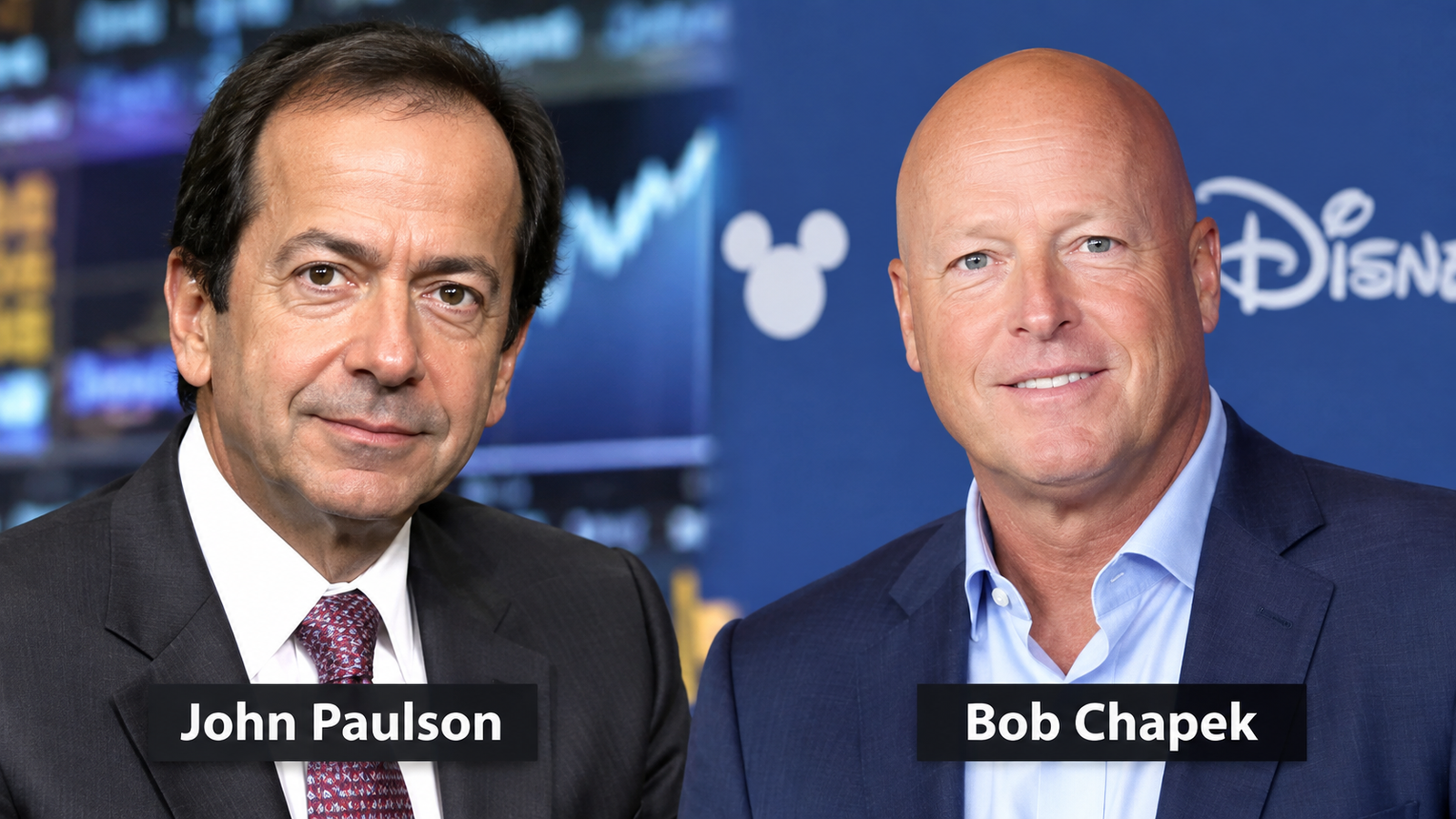
The landscape of modern American john paulson and bob chapek commerce presents two distinctly different avenues for achieving executive influence and building extraordinary wealth. On one hand sits the high-stakes world of finance and capital allocation, where bold contrarian positions can alter global markets overnight. On the other lies the complex domain of corporate operations, where managing giant workforces, complex supply chains, and consumer ecosystems requires methodical execution.
Examining the careers of hedge fund manager John Paulson and former entertainment executive Bob Chapek highlights these contrasting paths. While Paulson built his reputation on Wall Street by analyzing macroeconomic shifts and engineering one of the most profitable trades in financial history, Chapek climbed the corporate ladder through operational oversight and brand management at The Walt Disney Company. Exploring how these two business leaders approached risk, decision-making, and organizational management offers valuable insight into how value is created across different sectors.
Strategic Vision and Approaches to Risk Management
Risk management in capital markets demands an analytical focus on system-wide vulnerabilities and asymmetric opportunities. John Paulson demonstrated this mindset when he founded Paulson & Co. in 1994, focusing on event-driven strategies and special situations. His most famous achievement came during the 2007–2008 financial crisis, when he foresaw the collapse of the U.S. housing market. By purchasing credit default swaps against subprime mortgage securities, Paulson took a calculated, highly contrarian position that generated billions in profit for his firm. This approach relied on fundamental market research, high conviction, and the ability to hold a position against prevailing market sentiment until the macro thesis played out.
In stark contrast, operational risk management inside a massive corporate enterprise like Disney operates on a completely different set of principles. Bob Chapek spent nearly three decades advancing through various divisions at Disney, including consumer products, home entertainment, and parks. When he assumed the role of Chief Executive Officer in early 2020, his primary challenge was managing immediate operational volatility rather than market speculation. Facing the unprecedented global disruptions of the COVID-19 pandemic, Chapek had to navigate park closures, paused cruise lines, and frozen theatrical releases. Risk management in his context was not about taking aggressive financial bets, but about preserving cash flow, restructuring distribution models, and expanding digital streaming services like Disney+.
The divergence in their strategic vision underlines the fundamental difference between investing capital and managing operations. An investor like Paulson focuses on identifying mispriced assets and macroeconomic imbalances, where success is measured directly by portfolio returns. An operational leader like Chapek focuses on organizational execution, efficiency, and maintaining consumer trust across multiple physical and digital touchpoints. While Paulson’s strategy required embracing isolation and market skepticism to capture massive upside, Chapek’s role required consensus-building, crisis navigation, and balancing long-term brand equity against immediate operational headwinds.
Crisis Leadership and Navigating Market Disruption
Navigating systemic disruption tests an executive’s adaptability, but the mechanics of crisis management depend heavily on the structure of the organization. During the subprime mortgage crisis, John Paulson’s leadership was defined by conviction in the face of widespread market denial. The trade against subprime debt required immense discipline, as holding mortgage default swaps carried significant carrying costs before the market ultimately turned. Paulson had to maintain investor confidence within his firm while waiting for structural weakness in the banking sector to manifest. His leadership during this period was quiet, analytical, and execution-oriented within a relatively lean institutional setting.
For Bob Chapek, crisis leadership meant steering a multi-billion-dollar global entertainment enterprise through an environment where physical operations were suddenly halted. Taking over as Disney CEO in February 2020 placed him at the center of a complex operational dilemma. Unlike an investor who can exit positions or pivot portfolios with relatively low friction, Chapek was responsible for hundreds of thousands of employees, massive fixed assets, and complex supply chains. His approach focused heavily on aggressive cost containment, debt issuance to bolster liquidity, and accelerating the direct-to-consumer pivot. Managing through a crisis of that scale required rapid adaptation, restructuring legacy business models to keep audiences engaged during lockdown conditions.
Comparing these two crisis periods illustrates the varying constraints imposed by financial markets versus physical operations. Paulson benefited from the flexibility inherent to capital allocation; he could reallocate capital, adjust leverage, and operate outside the public eye until his financial thesis was validated. Chapek operated in an intensely public environment where every pricing decision, workforce adjustment, and content strategy was scrutinized by consumers, board members, and Wall Street. These two scenarios show that while financial crises require rigorous analytical patience, operational crises demand immediate tactical re-engineering and rapid execution.
Capital Allocation vs. Resource Utilization
The primary objective of a hedge fund manager is efficient capital allocation—directing funds toward assets that offer the highest risk-adjusted returns. John Paulson’s career exemplifies this discipline. Beyond his subprime mortgage trade, Paulson & Co. consistently evaluated merger arbitrage, distressed debt, and special situations where event-driven dynamics created value misalignments. Capital allocation in this realm is fluid; assets are acquired, held, or liquidated based entirely on market conditions and expected yields. This fluid deployment of capital allows high-performing hedge funds to capture asymmetrical gains across fluctuating economic cycles.
On the corporate side, resource utilization involves managing physical infrastructure, creative talent, and long-term capital expenditure projects. During his tenure as Chairman of Disney Parks, Experiences and Products—and later as CEO—Bob Chapek oversaw significant capital deployment toward physical asset expansion. Projects like launching new immersive park lands or upgrading digital reservation systems required multi-year commitments that could not be easily reversed. Resource management in a legacy enterprise requires balancing heavy capital reinvestment against corporate profit margins and shareholder dividends.
Understanding the distinction between capital allocation and resource utilization is key to evaluating corporate success. An investor like Paulson operates with high liquidity and can pivot strategies as broader market trends evolve. An operational executive like Chapek must optimize existing, illiquid assets while driving yield through incremental operational improvements, product bundling, and cost management. Both disciplines require high analytical rigor, but they operate on vastly different timelines and structural conditions.
Corporate Governance, Public Perception, and Lasting Legacies
The long-term legacy of a business leader is often shaped by their institutional environment and public engagement. In the private wealth and hedge fund space, success is largely quantified by net asset value, compounded annual returns, and philanthropic impact. John Paulson’s financial achievements enabled significant philanthropic endeavors, including major donations to educational institutions like Harvard University and urban conservation initiatives like the Central Park Conservancy. His career trajectory reflects how individual investment insight can translate into lasting capital reserves, allowing for substantial private flexibility and strategic influence.
Conversely, corporate CEOs of public consumer brands operate under constant media attention, stakeholder scrutiny, and board oversight. Bob Chapek’s leadership tenure at Disney highlights the challenges of balancing corporate strategy, talent relations, and consumer sentiment. Operational leaders must maintain relationships across diverse groups—including creative talent, shareholders, regulators, and a global customer base. The pressures of quarterly earnings reports and political navigating demonstrate that running a consumer-facing empire demands skills far beyond internal financial management.
Ultimately, the trajectories of John Paulson and Bob Chapek reveal the dual pathways to high-level commercial leadership in modern capitalism. Whether through the analytical, high-leverage decisions of Wall Street or the complex operational governance of a media enterprise, both figures highlight the different skill sets required to manage capital, risk, and organizational strategy. Examining their careers provides a clear look at how value is generated, defended, and leveraged across today’s global economy.