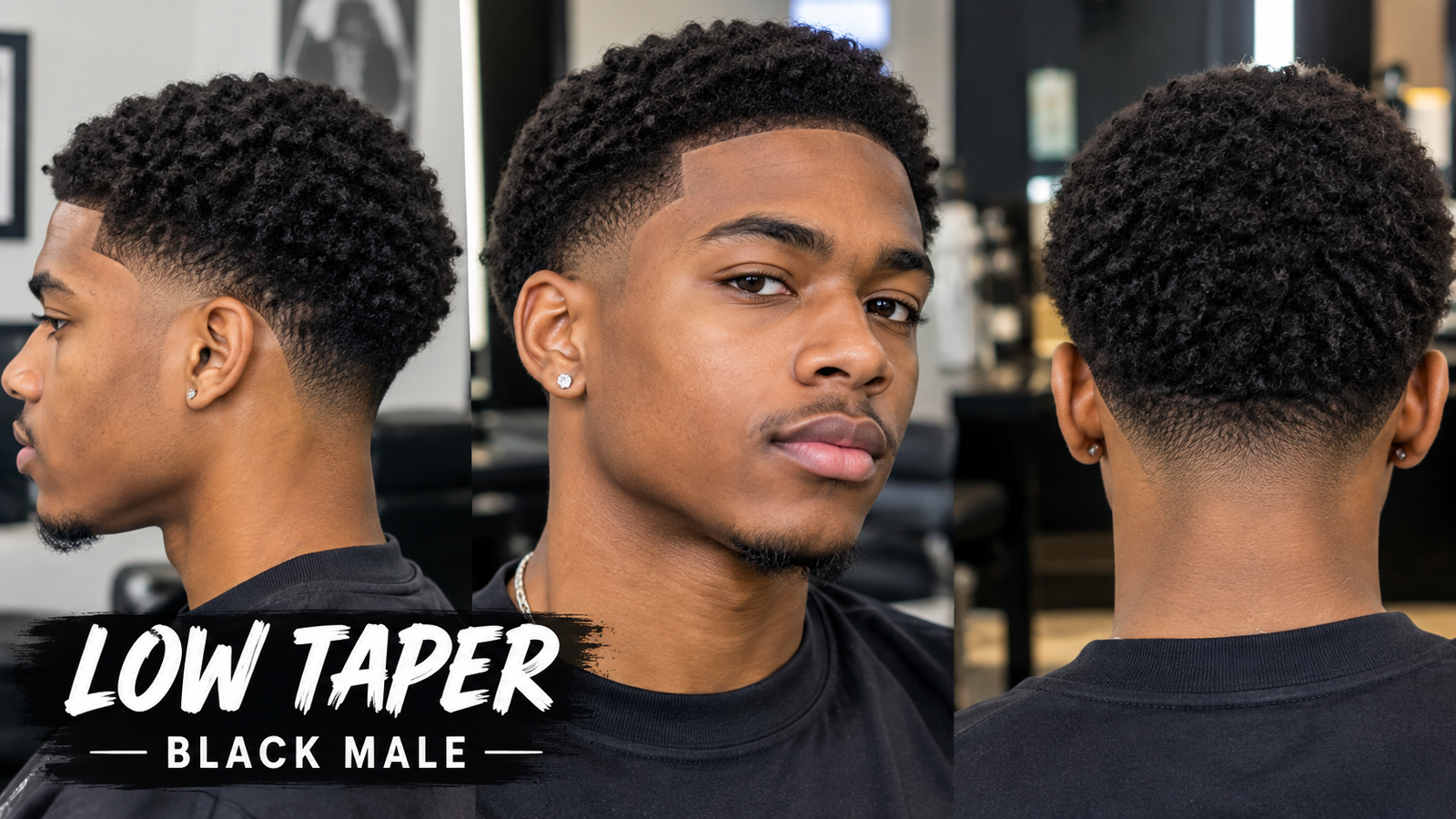
The low taper black male hairstyle has become a popular choice for men who want a clean haircut without taking too much hair away from the sides. It works especially well with natural curls, coils, waves, twists, locs, and short textured hair.
What makes the low taper different from a traditional fade is the placement. Instead of fading high toward the temples and sides, the taper stays low around the sideburns, ears, and neckline. This creates a more subtle transition while keeping plenty of natural texture on top.
A good low taper can look polished enough for work while still having the relaxed appearance many men want in their everyday style. The best version depends on your hair texture, face shape, preferred length, and how much maintenance you are comfortable with.
What Is a Low Taper for Black Men?
A low taper gradually reduces the hair around the sideburns and neckline. The transition starts close to the bottom of the sides rather than extending high up the head. The result is a neat outline with more hair left around the temples and upper sides.
This style is different from a low fade. A fade usually creates a more noticeable transition across the sides of the head. A taper focuses mainly on specific areas, especially the sideburns and neckline.
For Black men with textured hair, the low taper provides plenty of room to showcase the natural pattern of the hair. Curls, coils, waves, sponge twists, and other textures can remain the main feature of the haircut.
Why the Low Taper Black Male Style Is So Popular
One reason this haircut continues to attract attention is its versatility. You can pair a low taper with very short hair or leave several inches of length on top. The taper simply keeps the edges controlled.
Another advantage is that the haircut does not require a dramatic change to your overall appearance. Someone who wants a fresh haircut but does not want extremely short sides can choose a low taper.
The style also grows out relatively naturally when it is cut correctly. Since the taper is concentrated around the lower areas, you can maintain the overall shape without constantly changing the length of the hair on top.
Low Taper With Short Curls
Short curls and a low taper make a straightforward combination. The taper cleans up the areas around the ears and neckline while the curls remain visible across the top.
For this look, the barber usually keeps enough length on top for your natural curl pattern to show. A clean line around the forehead can add definition, although some people prefer a softer natural hairline.
The key is not to remove too much from the sides. The purpose of the haircut is to create a gradual transition rather than make the entire side extremely short.
Low Taper With Waves
A low taper can also complement a wave hairstyle. The waves provide texture across the top and sides, while the taper gives the haircut a cleaner finish around the lower edges.
If you wear waves, your normal hair routine remains important. Brushing technique, hair care, and consistent maintenance can affect how the waves appear.
A barber should understand how you wear your waves before deciding where to place the taper. Taking too much hair away from certain areas can change the overall appearance of the style.
Low Taper With Coils
Natural coils can look particularly defined when combined with a low taper. The contrast between the textured top and cleaner lower edges gives the haircut structure.
You can keep the coils relatively short for an easy everyday style or leave them longer for a more noticeable textured appearance.
A moisturizing routine can also help keep textured hair looking healthy. The exact products depend on your hair and scalp, so it is better to choose products based on your individual needs rather than following a one-size-fits-all routine.
Low Taper With Twists
Twists offer another way to personalize a low taper. You can wear short twists on top while keeping the taper around the temples and neckline.
Some men prefer a very subtle taper, while others want a sharper transition. The amount of contrast depends on how short the barber cuts the lower section.
The advantage of this combination is that the haircut does not compete with the twists. Instead, the clean edges help frame the hairstyle.
Low Taper With Locs
A low taper can also be used with locs. Keeping the lower sides and neckline neat can create a defined appearance while allowing the locs to remain the main feature.
The taper can be particularly useful when you want your locs to have a cleaner outline without removing significant length from the hairstyle.
Because locs vary greatly in thickness, length, and arrangement, communication with your barber is important. Explain exactly how much hair you want removed around the sides before the cutting begins.
Low Taper With a Line-Up
Adding a line-up can make a low taper look more defined. A line-up cleans the edges around the forehead and temples to create sharper visual boundaries.
However, a sharp line-up is not mandatory. Some men prefer their natural hairline because it gives the haircut a softer appearance.
If you choose a line-up, ask your barber to preserve your natural hairline rather than forcing an artificial shape. This can help the haircut look more natural as it grows.
Low Taper for Different Face Shapes
A low taper can be adapted to many face shapes because most of the hair remains on top. The main adjustment comes from the amount of height and texture you keep.
For a rounder face, some additional height on top can create a more elongated visual appearance. A squarer face can work well with controlled volume and defined edges.
Longer face shapes may benefit from keeping the top from becoming excessively tall. The goal is to create a balanced overall shape rather than follow a fixed formula.
Your natural hair pattern also matters. A barber should consider both your face shape and the way your hair naturally grows.
How to Ask Your Barber for a Low Taper
One of the easiest ways to avoid confusion is to show your barber a reference photo. Hair terminology can mean slightly different things to different people.
You can also explain the haircut in simple terms. Tell the barber that you want a low taper around the sideburns and neckline, while keeping the desired length on top.
Then explain whether you want a line-up, natural hairline, sharp temple area, or softer finish. If you have curls, waves, coils, twists, or locs, mention how you normally style them.
It is also useful to tell the barber what you do not want. For example, if you want a low taper rather than a high fade, make that distinction clear before the haircut starts.
How Short Should the Taper Be?
There is no single correct length for a low taper. Some people prefer the lowest section to be extremely short, while others want a softer transition.
A very short taper creates stronger contrast between the skin or closely cut area and the longer hair above it. A slightly longer taper produces a more gradual and understated result.
Your choice should depend on how noticeable you want the haircut to be. If you prefer a subtle everyday appearance, ask for a conservative taper.
If you like sharper contrast, your barber can make the lower section shorter while still keeping the taper low.
How to Maintain a Low Taper Black Male Haircut
Maintenance starts with keeping the edges clean. Depending on how quickly your hair grows, you may want to visit your barber regularly to refresh the taper and neckline.
The top usually requires a different routine depending on your texture. Curly and coily hair may benefit from appropriate moisturizing products, while waves require brushing and other consistent care.
Washing your hair and scalp regularly is also important. The exact frequency depends on your hair type, products, activity level, and scalp needs.
Avoid applying excessive amounts of styling products simply to make the hair look more defined. Too much product can create buildup and may make the hair appear heavy or greasy.
Common Mistakes With a Low Taper
One common mistake is asking for a low taper but receiving a fade that climbs much higher than expected. Showing a clear reference picture can reduce this problem.
Another mistake is taking too much length away from the temples. The defining feature of a low taper is that the transition remains low, so removing too much hair can change the haircut completely.
An overly aggressive line-up can also alter the appearance of the hairline. A clean edge should still complement the natural shape of your hair.
Finally, choosing a haircut without considering your natural texture can make maintenance harder. Your barber should work with your hair rather than against its natural growth pattern.
Low Taper vs. Low Fade
Although the names sound similar, a low taper and low fade are not exactly the same haircut.
A low taper generally concentrates the shortening around the sideburns and neckline. More of the side hair remains intact.
A low fade creates a broader transition that moves upward from the lower sides. This can produce a more obvious faded appearance.
If you want your natural texture to remain the dominant feature, a low taper may provide the subtle framing you are looking for. If you prefer a more noticeable change on the sides, a low fade creates a different visual effect.
Is a Low Taper Easy to Maintain?
Compared with some highly detailed hairstyles, a low taper can be relatively manageable. The main maintenance requirement is keeping the taper and edges fresh.
The amount of work required on top depends entirely on your chosen style. Short curls may need little daily styling, while waves, twists, and longer textured hairstyles can require more regular attention.
Hair growth speed also affects how often you need a haircut. Some people notice their taper losing definition quickly, while others can go longer between barber visits.
The best schedule is therefore personal. Instead of following a fixed number of days, pay attention to when the taper starts losing its intended shape.
Final Thoughts on the Low Taper Black Male Style
The low taper black male haircut offers a flexible way to keep the sides and neckline clean while preserving natural hair texture. Its subtle placement makes it suitable for short curls, coils, waves, twists, locs, and other hairstyles.
The most important part is getting the proportions right. Your barber should understand how much length you want to keep and exactly how low you want the taper.
A reference photo, clear instructions, and realistic expectations can make a major difference. Once the haircut is shaped correctly, simple and consistent hair care can help you keep the style looking fresh.
Whether you prefer a natural finish or a sharper line-up, the low taper can be adapted to your personal style without requiring a dramatic change to the hair on top.